DE
DE
 EN
EN
 WhatsApp
Selling a De-Registered Car: What Do You Need to Know?


Can I sell my deregistered car?
Yes, you can sell your deregistered car. The vehicle does not have to be registered in order to be sold. However, it is important to know: A deregistered car cannot simply be driven on public roads.
This mainly affects the test drive and pickup. The buyer needs a suitable solution, such as transport, temporary license plates, or other permitted plates. For you as the seller, selling a deregistered car is often clearer because registration and vehicle tax no longer run through you as they did before. You should still clarify the insurance separately, as the contract may be suspended, adjusted, or terminated depending on the case. In short: The sale is possible, but it requires clear agreements.
Why sell a deregistered car?
Some sellers only want to sell their car deregistered in order to create clear conditions after the handover. If the vehicle has already been deregistered, the buyer cannot simply continue driving with your license plates. This reduces the risk that fines, parking violations, or other matters initially end up with you.
The question: "Car sold deregistered, who is liable?" can also be assessed more clearly because the vehicle can no longer be driven regularly under your registration. In addition, vehicle tax no longer continues as before after deregistration. You should still clarify the insurance separately, as it may be suspended, adjusted, or terminated depending on the contract.
There is also one disadvantage. A spontaneous test drive is more difficult, and the pickup must be organized in advance. Nevertheless, selling a deregistered car can make sense if you want fewer open issues after the sale. A clean purchase contract remains important.
Advantages and disadvantages of selling a deregistered vehicle
| Advantages | Explanation |
|---|---|
| Clear separation after the sale | The car no longer runs regularly under your registration. This means there are fewer open issues after the handover. |
| Lower risk due to delayed re-registration | The buyer cannot simply continue driving with your license plates. This reduces possible problems caused by fines, parking violations, or delayed re-registration. |
| Vehicle tax no longer continues as before | After deregistration, the vehicle is no longer registered to you. This also makes the tax assignment clearer. |
| More control over the sale completion | You only hand over the vehicle once transport, payment, documents, and purchase contract have been clarified. |
| Useful for longer standing times | If the car is no longer being used or is to be sold over a longer period, deregistration can prevent unnecessary ongoing costs. |
| Disadvantages | Explanation |
|---|---|
| No normal test drive possible | Without registration and suitable license plates, the car may not be driven regularly on public roads. |
| Pickup must be organized | The buyer needs a solution such as a trailer, transport service, temporary license plates, or another permitted option. |
| Less convenient for buyers | Some buyers prefer registered vehicles because they can test them more easily and take them away directly. |
| Sale may require a little more preparation | Before the handover, transport, costs, payment, documents, and purchase contract should be carefully coordinated. |
| Clarify insurance separately | Even if the car is deregistered, you should check with your insurance provider whether the contract is suspended, adjusted, or terminated. |
How can a deregistered car be viewed, test-driven, and picked up?
Unlike the situation where you want to sell your registered vehicle, special rules apply to a deregistered vehicle. Without registration and suitable license plates, it may not be driven regularly on public roads.
A viewing on private property is usually uncomplicated. The buyer can look at the vehicle, check its condition, and compare the documents. A test drive is more difficult. Without valid registration and suitable license plates, the car may not be driven regularly on public roads.
There are several possible solutions for pickup. The buyer can have the vehicle picked up with a trailer or transport service. Temporary license plates may also be possible if the requirements are met. Red license plates are generally only available to dealers, workshops, or inspection centers.
It is important that you agree in advance who will organize the transport and who will cover the costs. This agreement can also be included in the purchase contract.
The purchase contract for a deregistered car: What should it include?
A written purchase contract is also important for a deregistered car. It should clearly record the buyer’s details, vehicle data, condition, price, and time of handover.
Anyone looking for information about a contract when selling a deregistered car mainly needs to know which details are truly important. These include the name and address of both buyer and seller, the vehicle identification number, mileage, purchase price, and date of handover.
Known defects should also be listed in the contract. This is especially true for older vehicles or if you want to sell an accident-damaged car, if there are technical problems, or if you want to sell your car without TÜV . The more precisely the condition is described, the less room there is for misunderstandings later.
It should also be recorded which documents and keys were handed over. These include, for example, registration certificate Part I, registration certificate Part II, available keys, inspection reports, or service documents.
Is it possible to sell a car without TÜV and deregistered?
Yes, you can sell a car without TÜV and deregistered. A missing TÜV inspection does not prevent the sale. However, it usually affects the value and the type of pickup.
Without TÜV and without registration, pickup becomes especially important. The buyer must clarify in advance whether transport, temporary license plates, or another permitted solution is possible.
For sellers, it is important to state the missing TÜV openly. Known technical defects should also be included in the purchase contract. This way, the buyer knows the condition in which they are taking over the vehicle.
Can I sell my car without registration certificate Part II?
Selling a car without registration certificate Part II is difficult and should be clarified carefully in advance. This document is still often referred to as the vehicle title and is very important for later registration.
The exact classification is important: The registration certificate Part II is not proof of ownership in the strict legal sense. However, it is a central vehicle document. Buyers generally want to see that all important documents are available and that the car can later be registered again.
When it comes to selling a car without a vehicle title, the main issues are proof, trust, and later registration. If the document has been lost, it should be checked before the sale how a replacement can be requested. Without registration certificate Part II, the sale usually becomes significantly more complicated.
Can I drive the car on the day of deregistration?
After deregistration, a car generally may no longer be used on public roads like a normally registered vehicle. Trips on the day of deregistration may be subject to special rules depending on the situation.
Therefore, you should not rely on being able to simply continue driving after deregistration. Clarify in advance with the registration office or your insurance provider what is allowed in your specific case.
For the sale, the simplest solution is often: prepare everything first, then deregister the car, then clearly organize handover or transport. This helps you avoid unnecessary uncertainty.
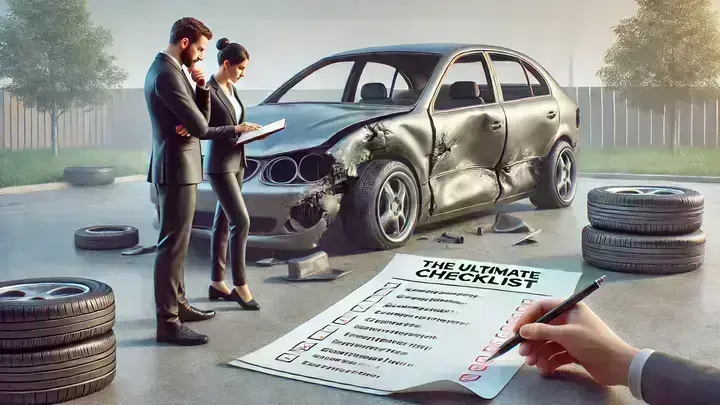
Checklist: Selling a deregistered car at a glance
With this checklist, you can prepare the sale of a deregistered car properly. The most important thing is that test drive, pickup, documents, payment, and purchase contract are clearly arranged before the handover.
| Point | Why is this important? |
|---|---|
| Check the vehicle condition | This allows you to honestly state defects, damage, and missing TÜV. |
| Have vehicle data ready | Make, model, VIN, mileage, and first registration belong in the purchase contract. |
| Check registration certificate Part I and Part II | Both documents are important for buyers, especially for later registration. |
| Collect existing documents | Inspection reports, service booklet, invoices, and expert reports help assess the vehicle. |
| Prepare all keys | The purchase contract should state how many keys were handed over. |
| Enable viewing on private property | A deregistered car may not simply be moved regularly on public roads. |
| Clarify test drive in advance | The buyer needs suitable license plates or another permitted solution for this. |
| Organize pickup | Clarify whether the buyer will use a trailer, transport service, temporary license plates, or other permitted license plates. |
| Define transport costs | Record who is responsible for organizing and paying for pickup. |
| Agree on purchase price and payment method | Payment should be traceable before or directly at the handover. |
| Create a written purchase contract | Buyer details, vehicle data, price, handover time, and condition should be clearly recorded. |
| Enter known defects | This reduces later misunderstandings, especially in the case of accident damage, technical problems, or missing TÜV. |
| Document the handover time | Date and time help clearly prove the sale later. |
| List handed-over documents and keys in the contract | This makes it clear what the buyer received. |
| Inform or check insurance | Depending on the contract, the insurance may be suspended, adjusted, or terminated. |
| Keep copies or photos of the documents | You should store the purchase contract and deregistration confirmation safely. |
Conclusion
Selling a deregistered car is possible and makes sense for many sellers. The most important advantage is the clearer separation after the sale. Nevertheless, the process needs good preparation. In particular, test drive, transport, purchase contract, documents, and insurance should be clarified before the handover.
Frequently asked questions about selling a deregistered car
Can I sell my car without registration certificate Part II?
That is difficult. The registration certificate Part II is not proof of ownership in the strict sense, but it is a very important vehicle document. Without it, problems often arise with trust, proof, and later registration.
Deregister the car before selling it or not?
For sellers, deregistration is often safer. If you want to allow the buyer an easy test drive or direct drive home, the car is sometimes left registered. In that case, a particularly clean purchase contract is important.
Can I drive the car on the day of deregistration?
You should check this in advance. After deregistration, the car is no longer normally registered and may not simply be driven regularly on public roads.
How do I deregister my car most easily?
Usually through the registration office or, if possible, online. Which documents are required depends on the vehicle and the chosen method.
Selling a car without a vehicle title: Is that legally possible?
A sale may be possible depending on the case, but it is tricky. Without the vehicle title or registration certificate Part II, problems often arise with the documents and later registration.
We promise you the best offer for your vehicle – quickly, safely and easily, without any obligation.
Sell your car